Focus on the occupied space
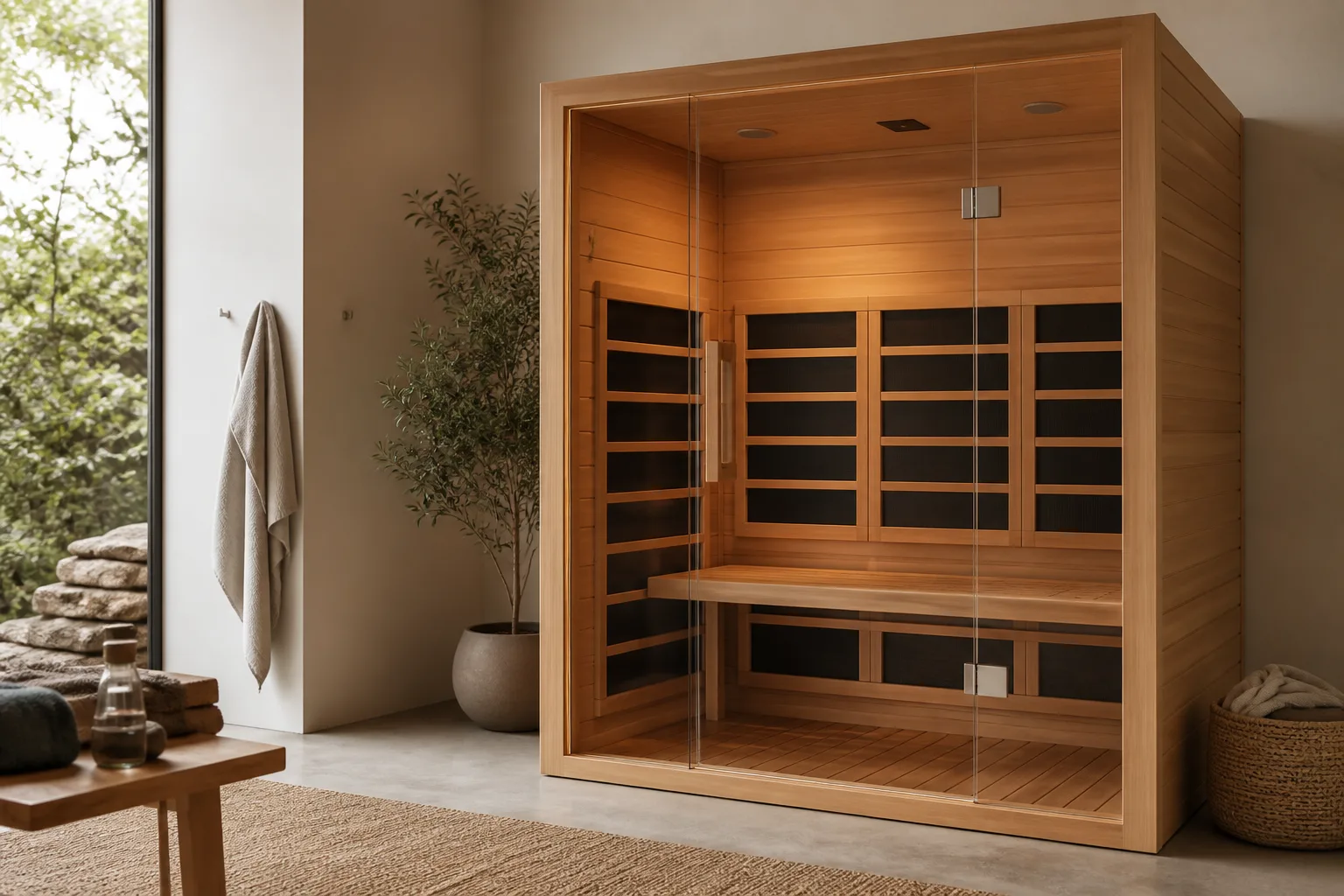
Far-infrared equipment is commonly arranged behind, beside, or near the legs of seated occupants. Study the panel layout with the benches in view. A cabin with many panels can still leave some positions with a different experience, particularly when several people share the same room.
Compare materials without shortcuts
Emitter descriptions such as carbon or ceramic do not tell the entire story. Ask about the panel construction, operating instructions, and coverage in the specific model. Do not treat one material word as a substitute for an interior drawing, a clear specification, or the ability to obtain replacement parts.
Make a practical home comparison
Measure the bench and entry, identify the supply requirements, and check how the cabin is assembled. Decide whether you value a compact footprint or extra room to adjust your posture. These everyday differences can be more useful than comparing the maximum displayed temperature in isolation.
Look at coverage from the seat
Infrared panels should be assessed in relation to where you actually sit. Compare the emitter positions, bench depth, legroom, and access to controls instead of counting panels alone. A specification sheet is most useful when it includes a clear interior drawing that connects the heating equipment with the intended seating positions.
Read model-specific specifications
Infrared product descriptions can use similar terms for different equipment. Ask for the emitter type, operating instructions, electrical requirements, and any test reports relevant to the claim you are comparing. Do not infer medical benefits, exposure levels, or outdoor suitability from a broad product label or a general statement about infrared technology.
Compare the ownership details
Confirm how the cabin is delivered, which parts need assembly, and how panels or controls can be reached for service. Review the written warranty and replacement-part process before ordering. For routine care, follow the instructions for timber, glazing, and electrical panels separately, keeping cleaning liquids away from components that must remain dry.
Questions Before You Choose
How does far infrared differ from a stone heater?
Far-infrared panels provide radiant heating; a traditional stone heater heats the stones and room air. The cabin systems are different.
Are carbon and ceramic panels interchangeable?
No. Compare the actual model’s panel design, placement, controls, and replacement requirements rather than swapping by material name.
Can I add water to far-infrared panels?
No. They are not sauna stones. Follow the panel instructions and keep liquids away from electrical components.
Do I need space behind the cabin?
Use its assembly and service clearance requirements. A small footprint does not imply flush placement against every wall.
Can two occupants receive different coverage?
Yes, panel positions and seating choices can affect coverage. Review the emitter layout for both intended positions.
Does a far-infrared label establish low EMF?
No. Any exposure claim needs model-specific measurements and a stated test method; the heating category alone is insufficient.
What should I compare before buying?
Compare usable bench space, panel positioning, supply requirements, control clarity, assembly access, and the process for servicing emitters.