The character of traditional heat
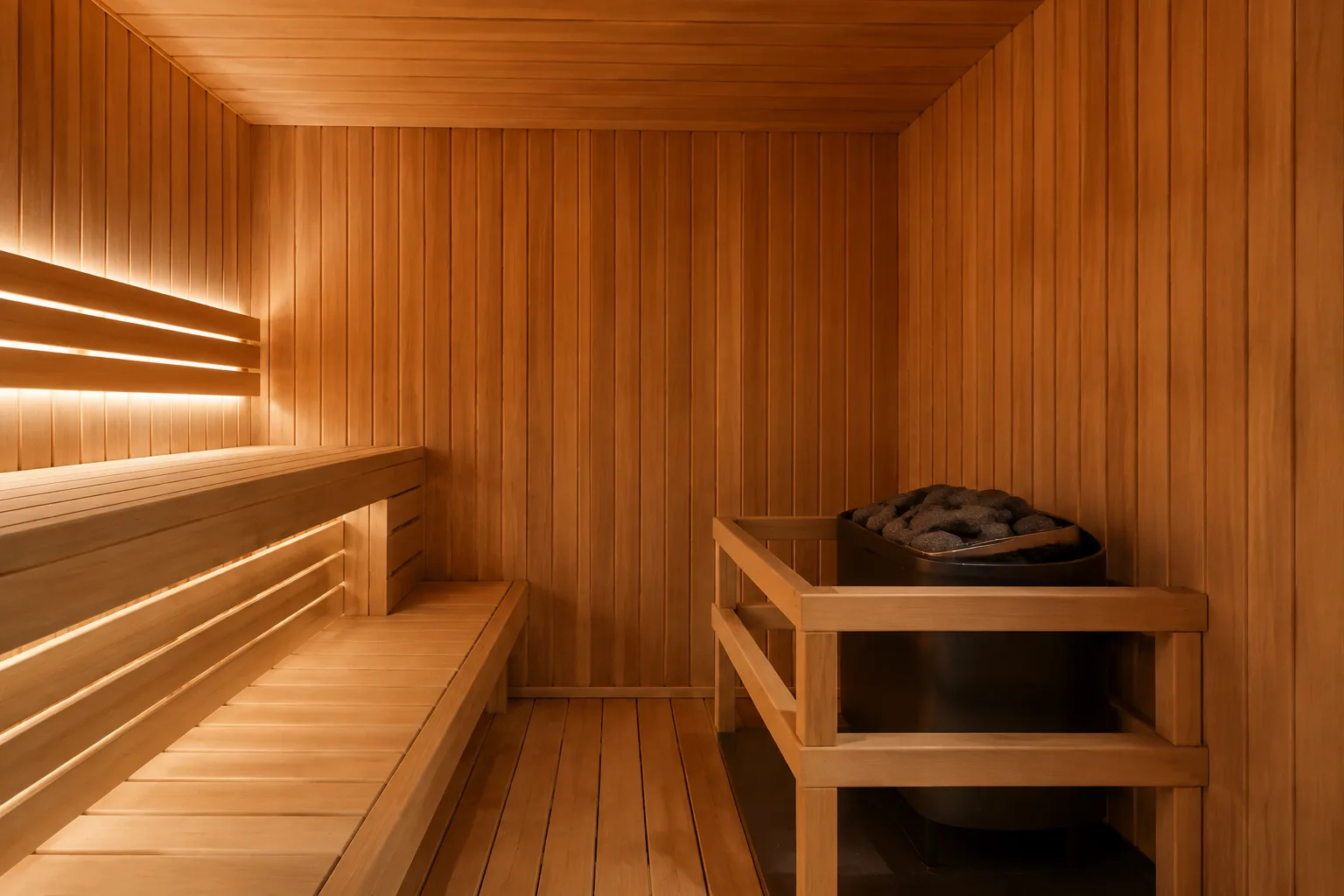
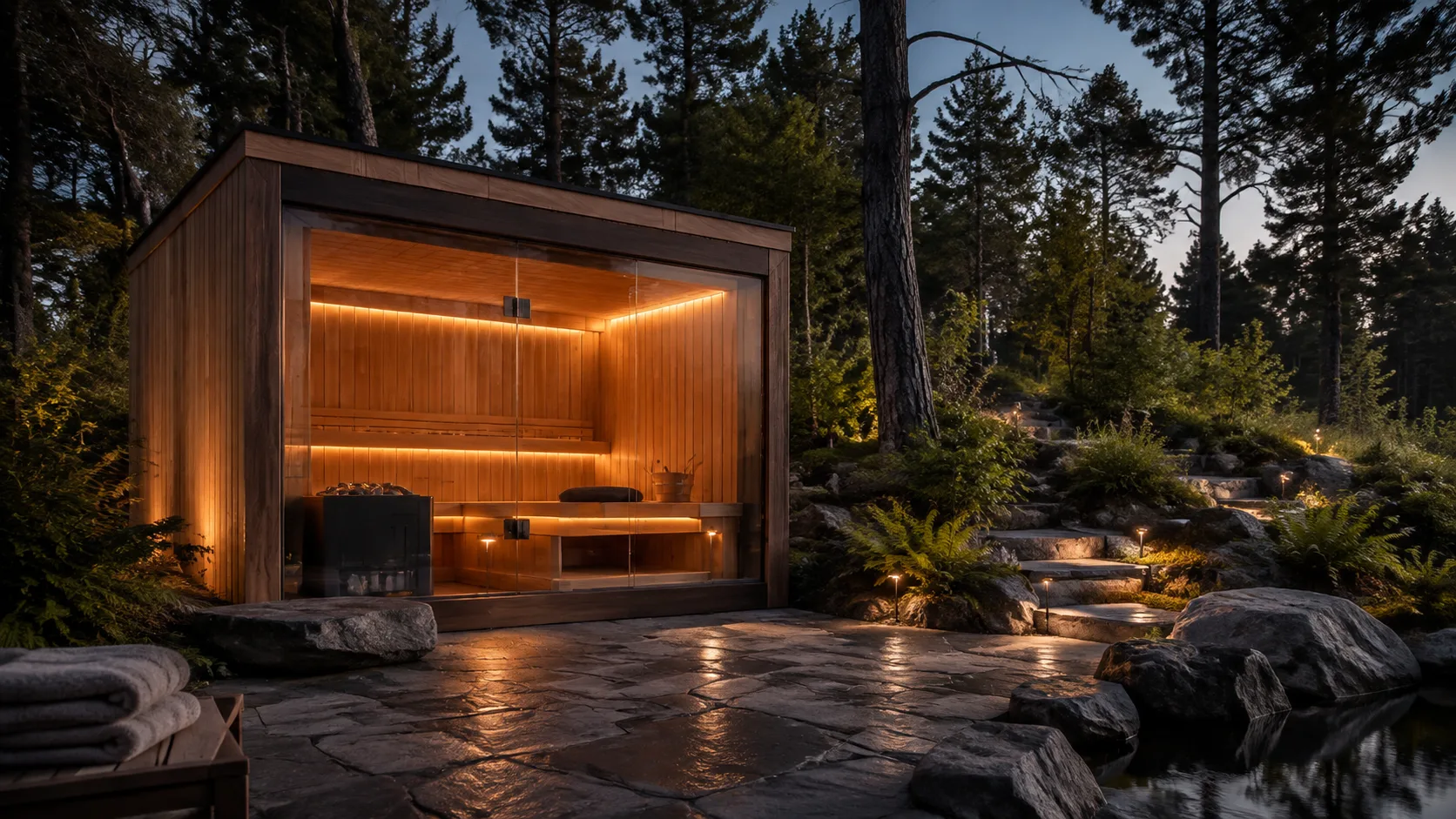
A traditional sauna is built around a heater, a properly designed room, and a place to sit comfortably within it. The air and stones warm together, creating an experience that differs from an infrared cabin. Where the heater permits it, small amounts of water on the stones can change the feel of the room. Choose the heating system and enclosure together rather than treating the heater as an accessory that can be added to any timber box.
Electric convenience or a wood fire
An electric sauna heater offers a different routine from a wood-burning stove. Electrical models require a suitable circuit and compatible controls; wood-fired systems require approved chimney components, clearances, combustion-air planning, fuel storage, and ash handling. Neither installation should be selected from appearance alone. Consider how often you expect to use the sauna and whether you want to tend a fire. Confirm that the intended setting and local requirements support the chosen heating method.
Bench layout changes the experience
The usable room is defined by its benches, circulation, and heater location. Compare the upper bench length, seated headroom, foot support, and the space needed to enter and exit without brushing the heater guard. A nominal capacity may assume closely spaced seated occupants rather than a person lying down. If reclining matters, request the clear usable bench length. Good drawings are more useful than broad capacity labels when comparing a compact indoor cabin with a larger outdoor room.
Size the heater to the actual room
Room volume is a starting point, not the whole calculation. Glass, masonry, insulation, and other construction details can affect the heater size recommended by the manufacturer. Use the enclosure and heater instructions together, and have the installation reviewed by qualified professionals. A larger heater is not automatically a better choice, and undersizing can make the room disappointing to use. Check compatibility between the heater, control unit, sensors, stones, and any remote-start equipment.
Separate sauna moisture from steam rooms
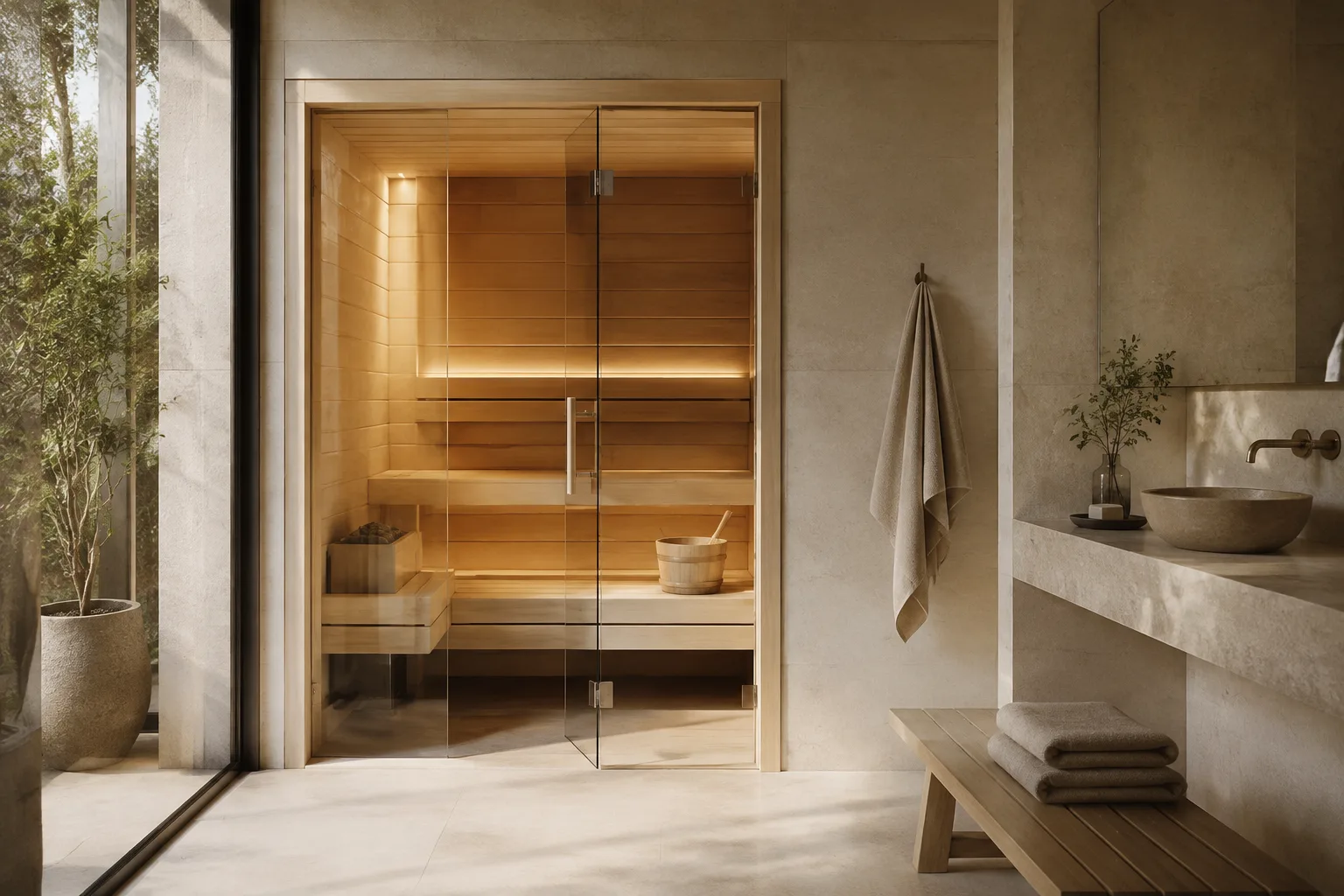
A traditional sauna is not the same assembly as a steam room. A steam room uses a dedicated generator and a different enclosure design for a saturated environment. Timber sauna benches, stone heaters, and brief water application do not make the two systems interchangeable. If you are considering an existing bathroom conversion, decide which experience you want before choosing wall finishes, ceiling construction, doors, ventilation, and equipment. The distinction should be clear in every quote and installation drawing.
Plan for regular care
The sauna should be easy to clean, dry, and service. Use care products permitted for the interior timber, keep ventilation unobstructed, and inspect sauna stones according to the heater instructions. The heater must cool before maintenance, and electrical work belongs with a qualified professional. Choose components with accessible replacement parts and clear operating information. Before ordering, itemize the enclosure, bench package, heater, guard, controls, stones, lighting, delivery, and installation so the final project has no assumed essentials.
Questions Before You Choose
What is considered a traditional sauna?
A traditional sauna uses a heater and stones to heat an enclosed sauna room. Electric and wood-burning heaters are common options, subject to the room design and installation requirements.
Can water be used on every sauna heater?
No. Use water only when the heater manufacturer permits it, and follow its quantity and water-quality instructions. Never treat infrared panels as stone heaters.
Is a dry sauna different from a traditional sauna?
Dry sauna often describes how a traditional room is used, but the term is also used loosely in marketing. Check the actual heater and enclosure specification.
Which traditional sauna is easiest to operate?
The easiest option depends on your preferences. Electric controls avoid tending a fire; a wood-burning sauna involves lighting, fuel, chimney care, and ash management.
How do I choose the heater size?
Use the manufacturer's room-sizing method, including adjustments for glazing and construction, and confirm the design with the installer.
Can a traditional sauna be installed inside a house?
Yes, with a suitable room design and compatible equipment. Electrical, ventilation, moisture, access, and clearance requirements must be addressed together.
Is a traditional sauna the same as a steam room?
No. Steam rooms use a steam generator and a different enclosure system. A traditional sauna's stone heater and timber interior require their own design.