Choose the fire routine deliberately
A wood-burning sauna involves preparing fuel, lighting the stove, tending the fire, and managing ash after it cools. Think about whether that routine is part of the experience you want. The stove door position and a convenient dry wood store influence everyday use as much as the cabin shape.
Treat the chimney as a system
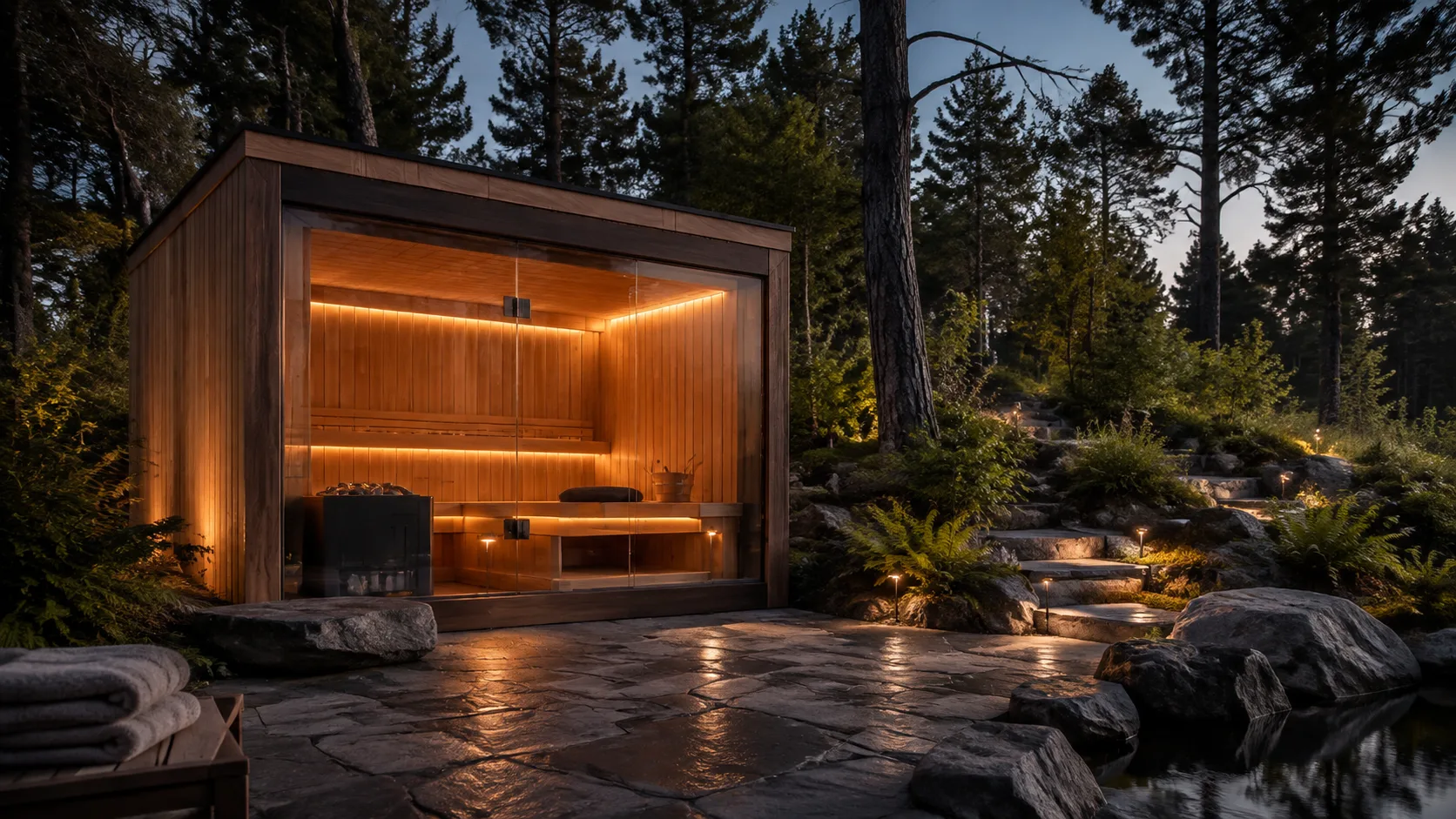
The stove, flue components, roof penetration, and combustible clearances must form a permitted installation. Do not compare stoves solely by appearance or assume an existing shed chimney will suit one. Have the exact equipment and building arrangement reviewed before ordering a cabin around it.
Plan movement around hot equipment
Consider how fuel reaches the firebox without blocking the entrance or passing close to occupied benches. Some stoves are loaded from another space; others are tended inside the hot room. Compare those layouts using the actual stove and guard dimensions, not a generic floor plan.
Size the system around the room
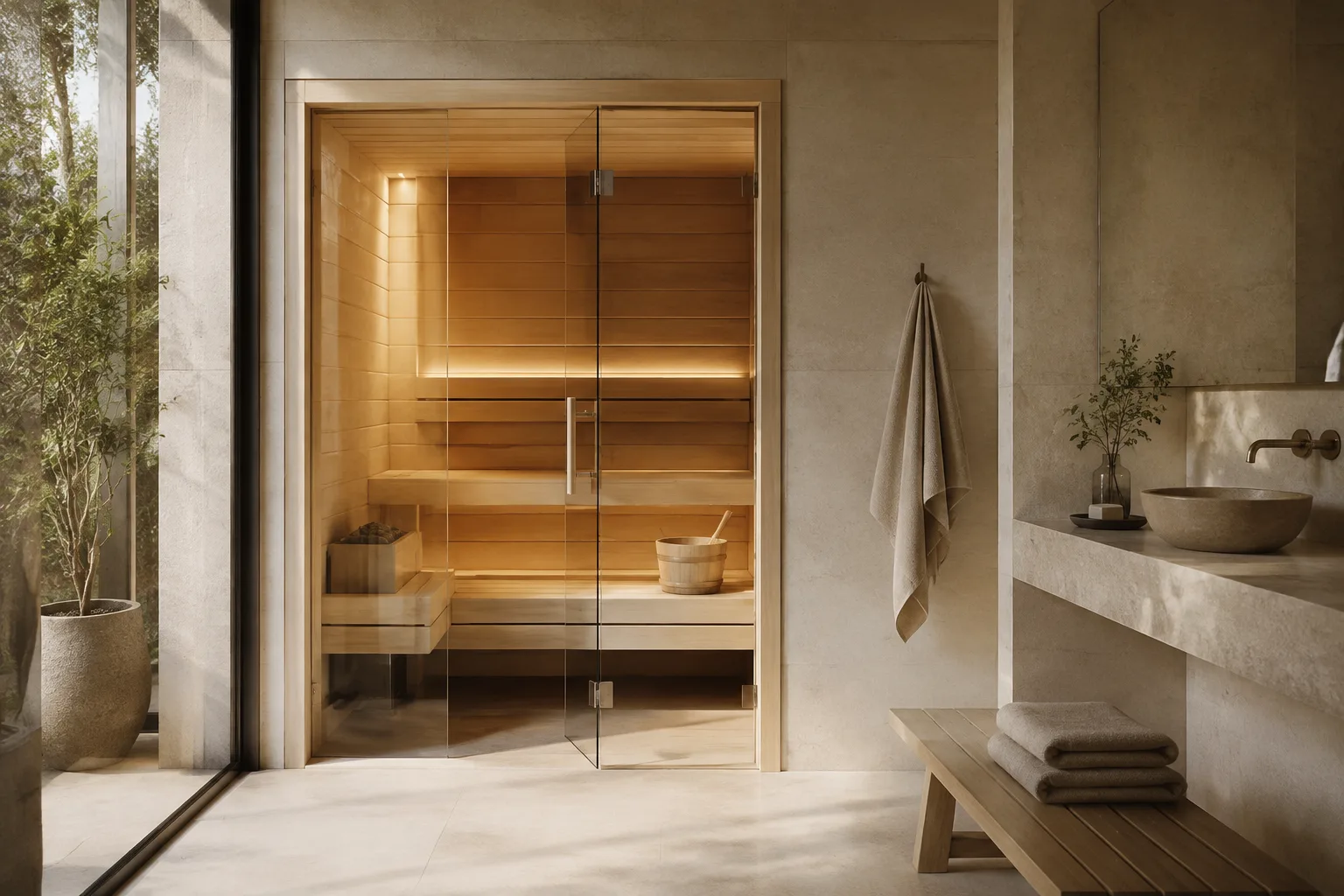
A traditional heater is selected for the actual sauna construction, not simply the number of people on the label. Review the room volume, glass and other uninsulated surfaces, ventilation design, and the manufacturer’s sizing method. Keep the cabin drawing and heater specification together so the installer can identify any mismatch before equipment is purchased.
Keep the hot room usable
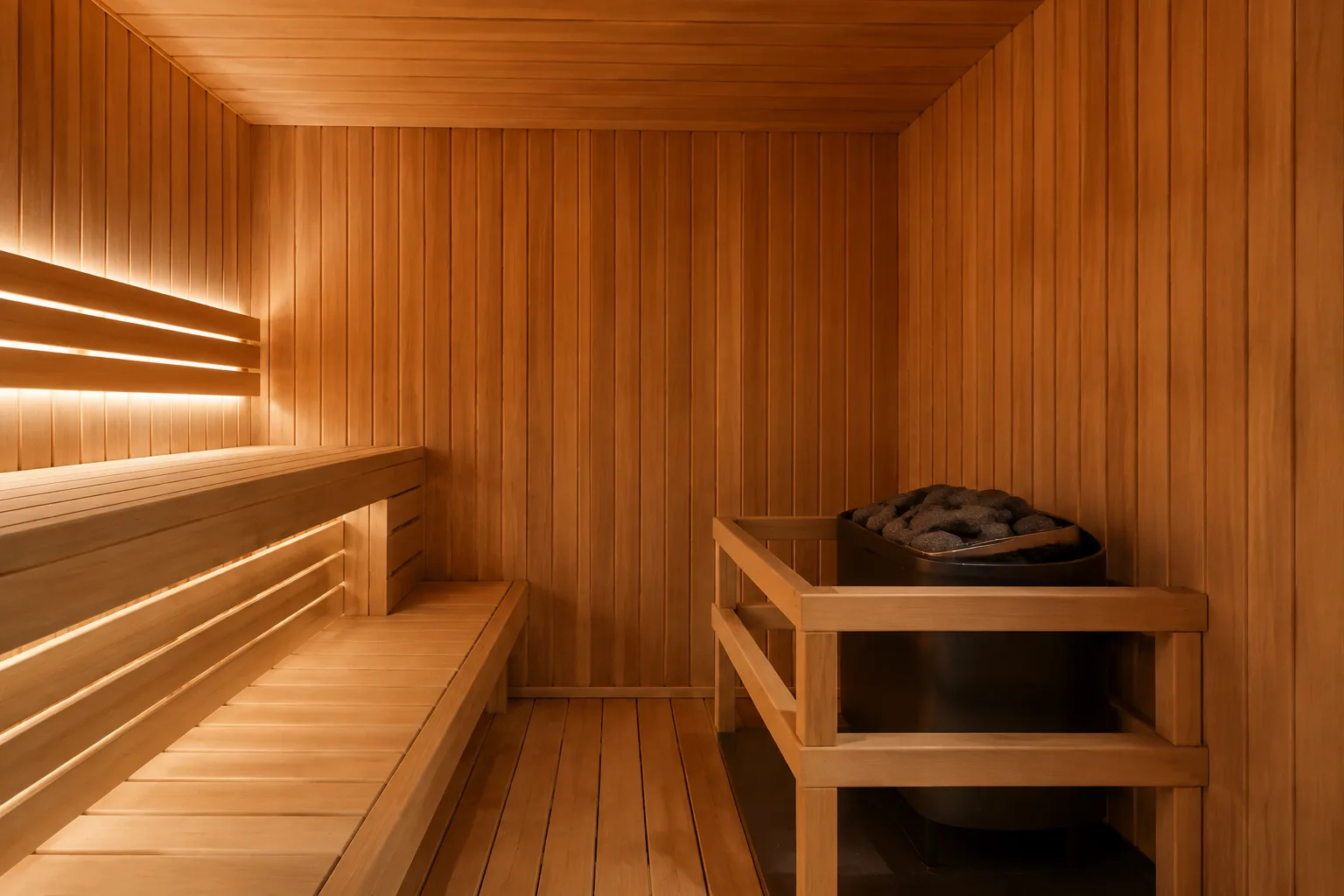
Draw the benches, steps, door swing, heater, and guard at their real dimensions. Preserve a clear entrance and the prescribed separation from hot equipment. Bench height and foot placement affect how comfortably the room can be occupied, while a longer upper bench may matter more than an additional compact seated position.
Review the full equipment package
Ask what the heating package includes beyond its headline component. Stones, controls, sensors, guards, mounting parts, and chimney or electrical accessories vary by system. Follow the exact instructions for operation, ventilation, water use, and drying, and retain the model information so replacement parts can be identified without relying on appearance alone.
Questions Before You Choose
Does a wood-burning sauna need electricity?
The stove may not, but lighting, accessories, or other equipment can. Check the full cabin specification.
Can any wood stove heat a sauna?
No. Choose a sauna-rated stove sized and installed for the heated room and the required operating conditions.
Is a chimney included with the stove?
Not always. Confirm the approved flue components, roof penetration, termination, and any required heat shielding separately.
Can I use the stove in a garage sauna?
Do not assume that placement is acceptable. Have the building, combustion air, chimney route, and local requirements reviewed first.
Where should firewood be stored?
Keep an appropriate dry supply in a location that preserves all stove clearances and does not obstruct the sauna entrance.
How should ashes be handled?
Follow the stove manual and wait for safe cooling. Use the specified handling method and keep ash away from combustible storage.
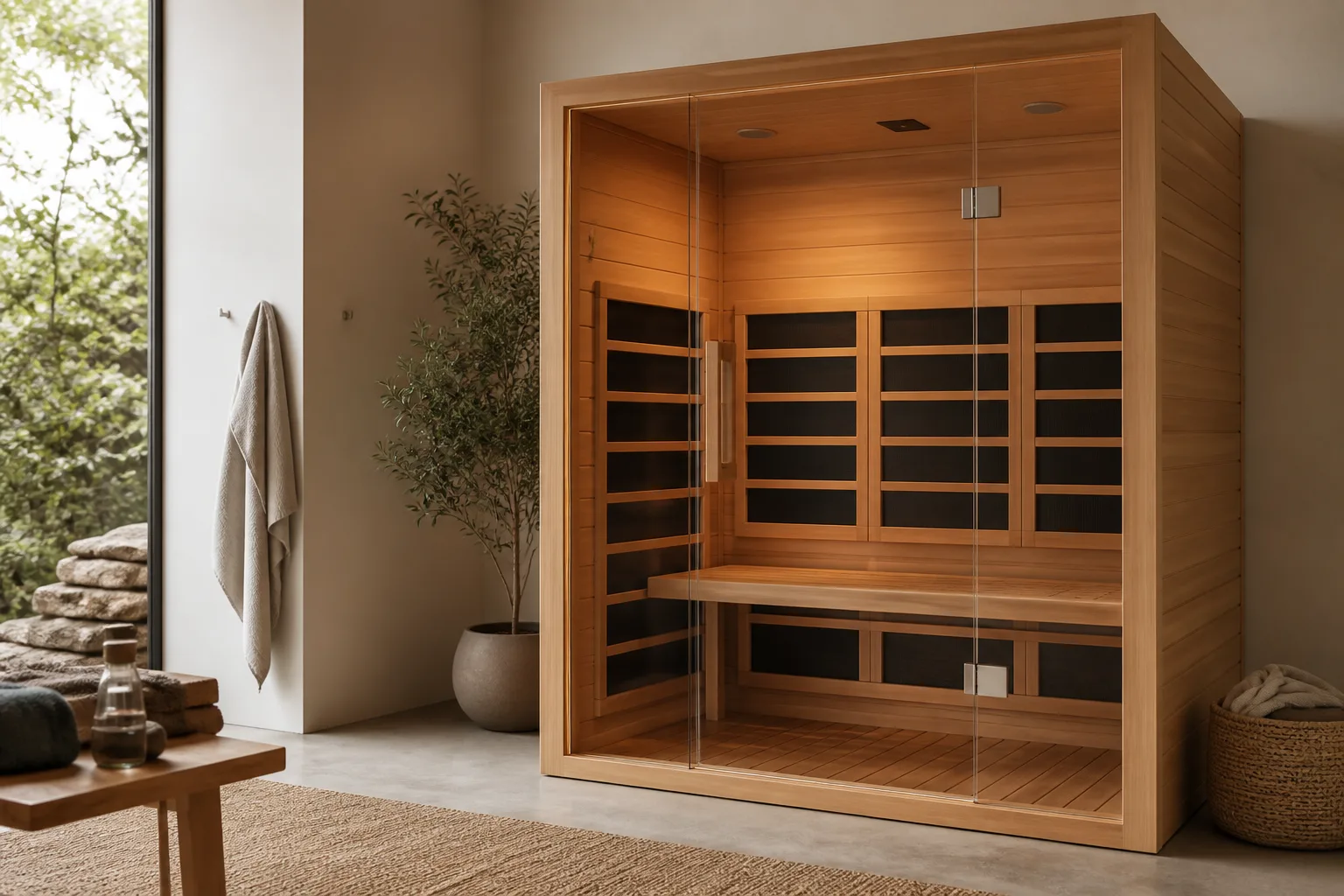
What is the key difference from electric heating?
Wood heat adds fuel, combustion, and chimney responsibilities; electric heat shifts the planning toward power supply and controls.