What dry heat means
Dry describes the bathing environment, not a separate cabin construction. A traditional sauna can be used without adding water to the stones. Compare the heater instructions and ventilation arrangement before assuming that a dry sauna is an infrared cabin or that it must always remain completely moisture-free.
Choose the room, not just the label
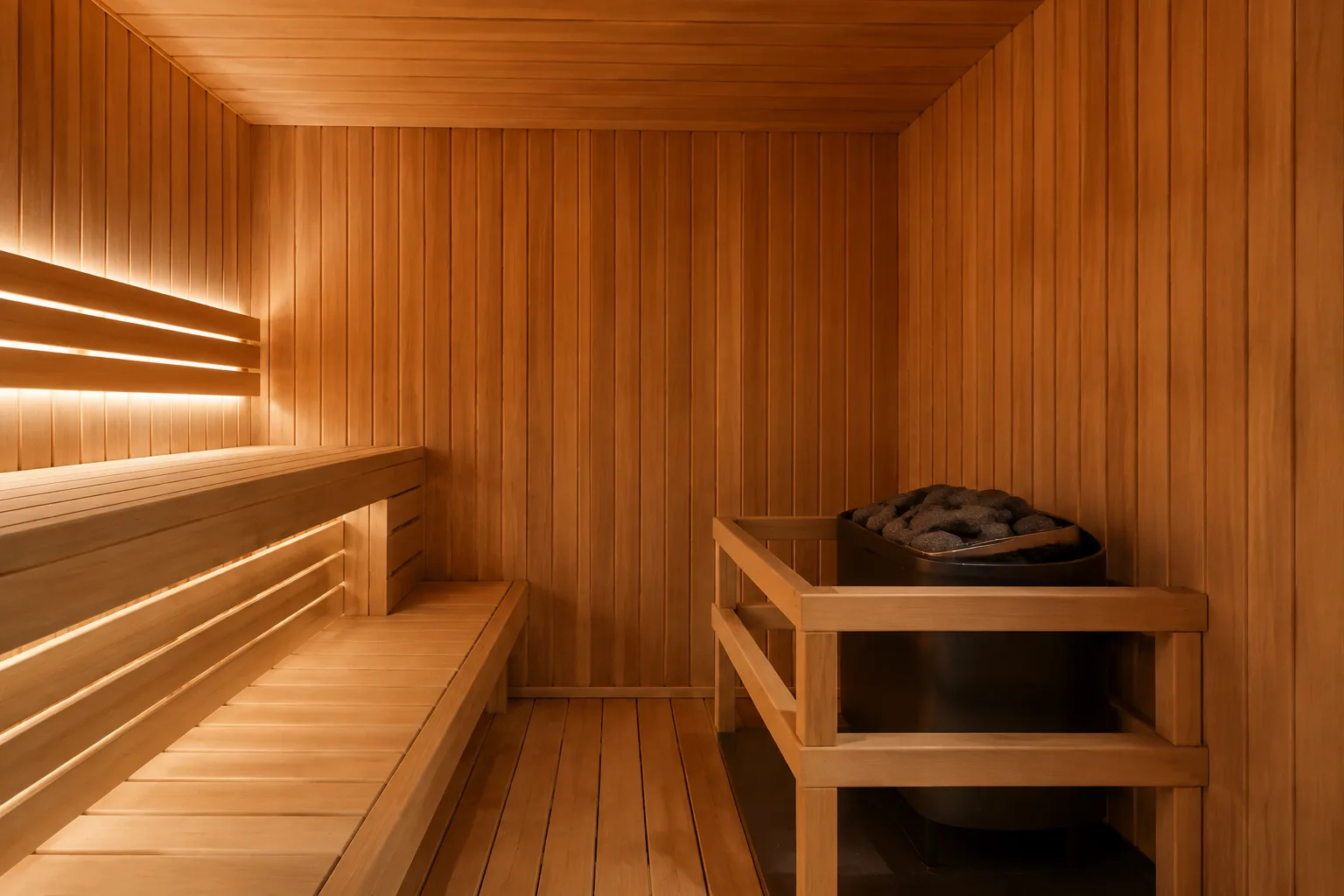
Look for a comfortable upper bench, a practical step or foot bench, and clearance around the heater. Those features affect how you occupy the warm room. A floor plan that counts every available sitting position may not suit someone who prefers stretching out alone.
Compare daily operation
Consider warm-up time, control placement, and how the room dries after use. A simple control can be easier to live with than a feature-heavy panel you rarely use. Keep towels away from the heater and follow the cabin instructions for airing and cleaning.
Size the system around the room
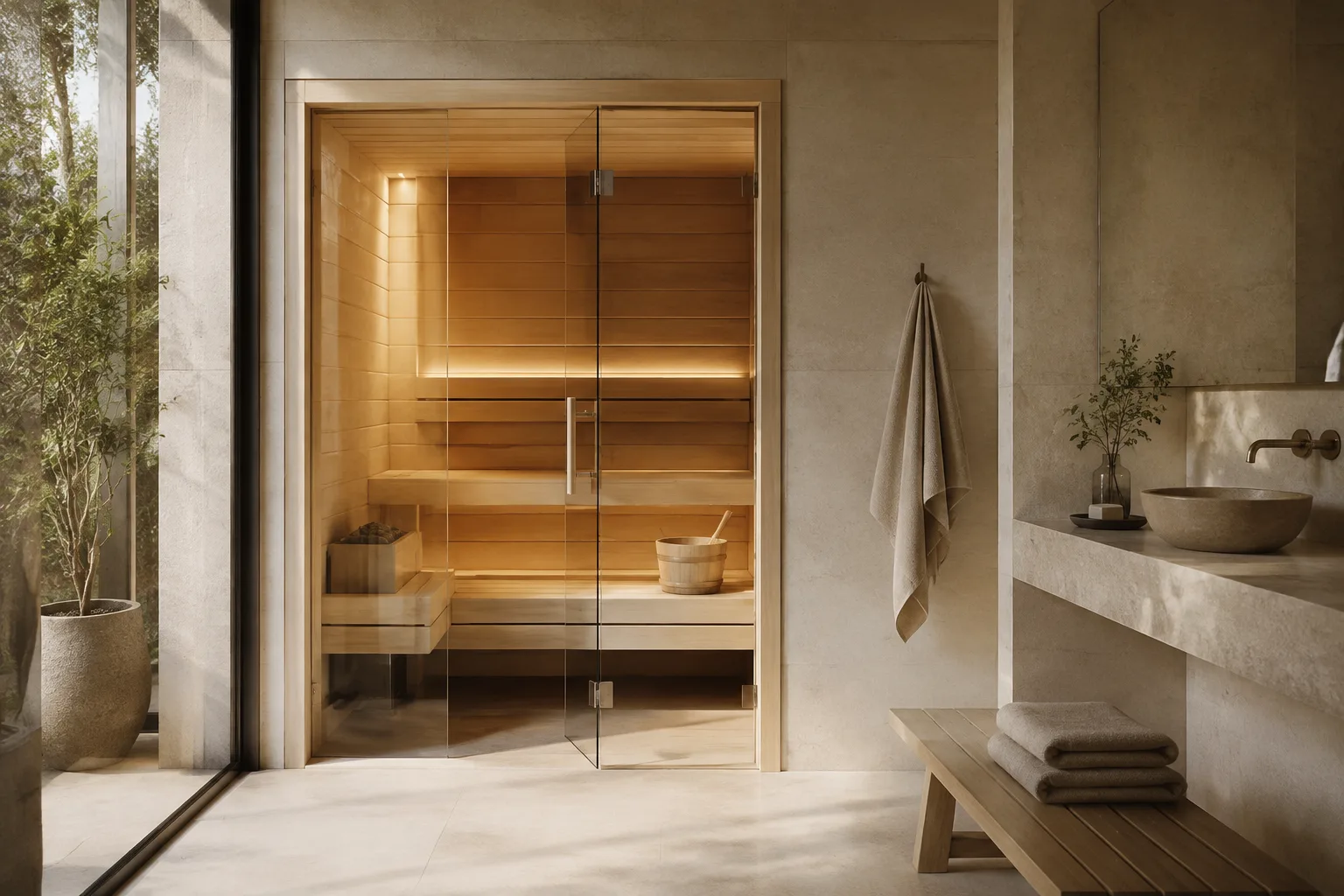
A traditional heater is selected for the actual sauna construction, not simply the number of people on the label. Review the room volume, glass and other uninsulated surfaces, ventilation design, and the manufacturer’s sizing method. Keep the cabin drawing and heater specification together so the installer can identify any mismatch before equipment is purchased.
Keep the hot room usable
Draw the benches, steps, door swing, heater, and guard at their real dimensions. Preserve a clear entrance and the prescribed separation from hot equipment. Bench height and foot placement affect how comfortably the room can be occupied, while a longer upper bench may matter more than an additional compact seated position.
Review the full equipment package
Ask what the heating package includes beyond its headline component. Stones, controls, sensors, guards, mounting parts, and chimney or electrical accessories vary by system. Follow the exact instructions for operation, ventilation, water use, and drying, and retain the model information so replacement parts can be identified without relying on appearance alone.
Questions Before You Choose
Is a dry sauna the same as an infrared sauna?
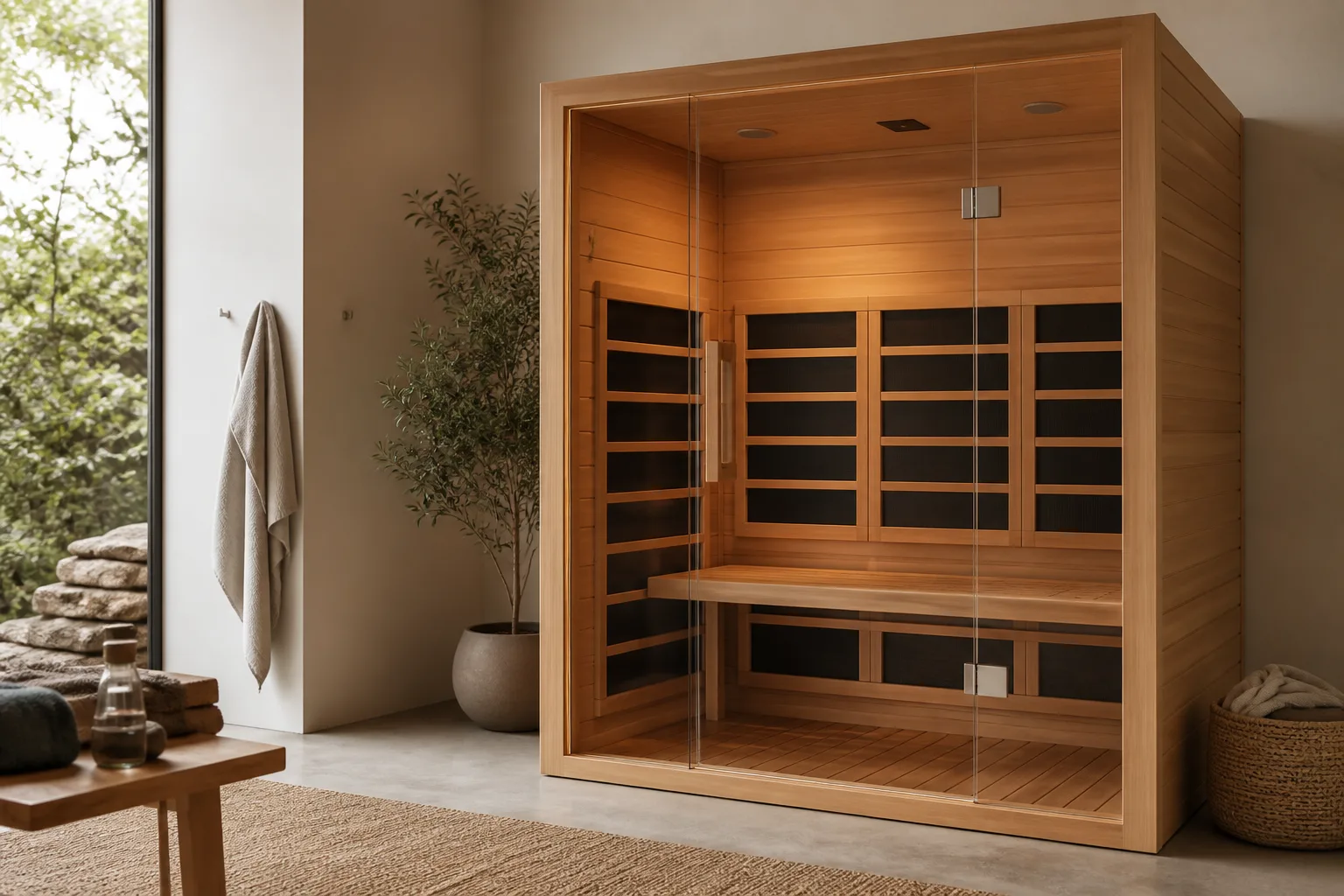
No. Dry usually describes a traditional heated-air sauna used with little added moisture; infrared uses radiant panels.
Can I pour water on a dry sauna heater?
Only if the heater manual permits it. The word dry does not establish whether a particular heater accepts water.
Does a dry sauna need ventilation?
Yes. Use the intake and exhaust arrangement specified for the room and heater, even when no water is added.
What bench layout should I choose?
Choose usable bench length and height for your preferred sitting or reclining position, with a clear route past the heater.
Can a dry sauna be installed outdoors?
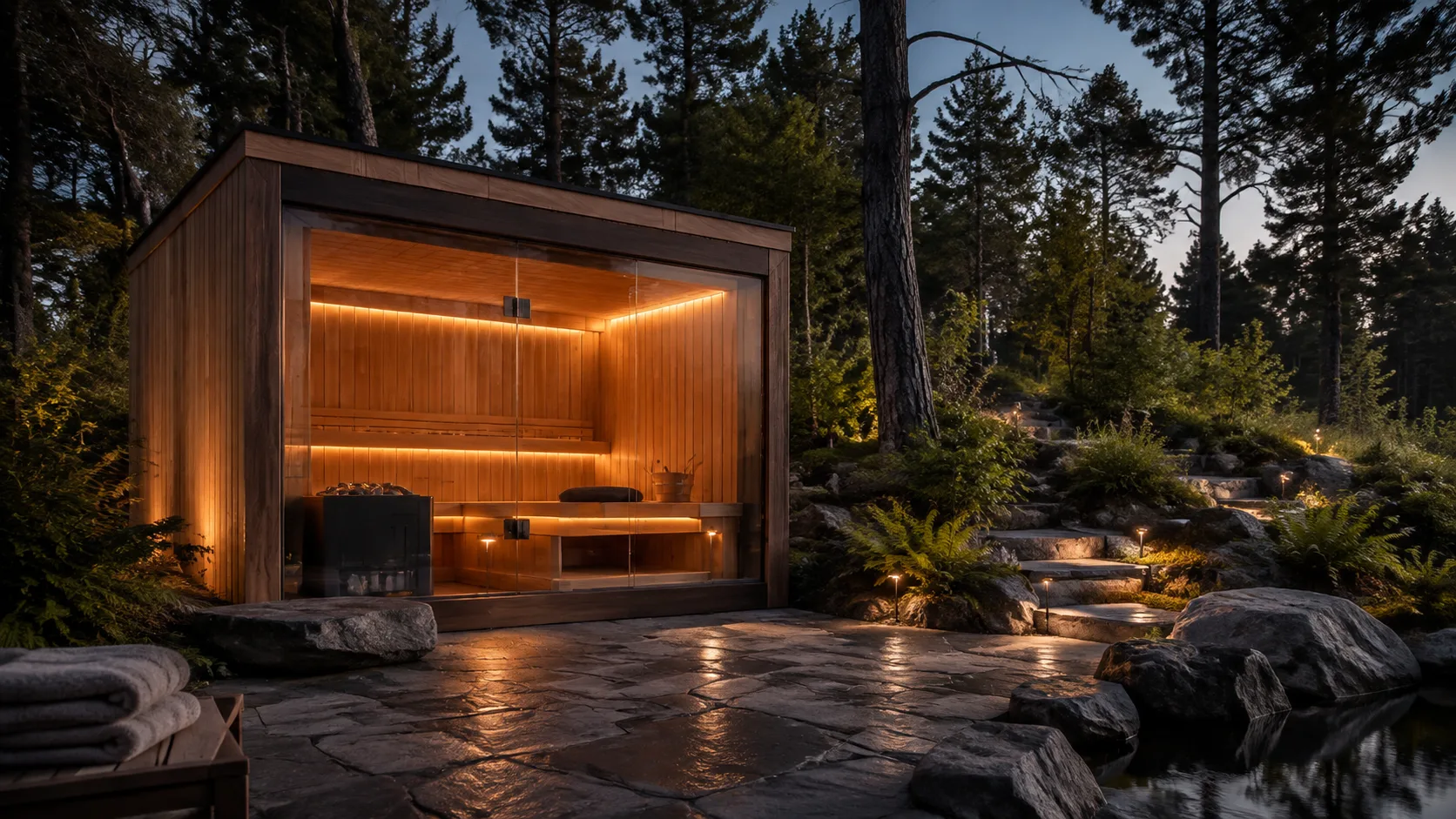
Yes, when its enclosure, roof, heater installation, and foundation are designed for that outdoor setting.
Does dry bathing eliminate cleaning?
No. Perspiration still reaches benches and flooring. Wipe surfaces as directed and allow the cabin to dry.
What should a dry sauna quote include?
Ask for the enclosure, benches, heater, stones, controls, ventilation components, delivery method, and installation exclusions as separate line items.