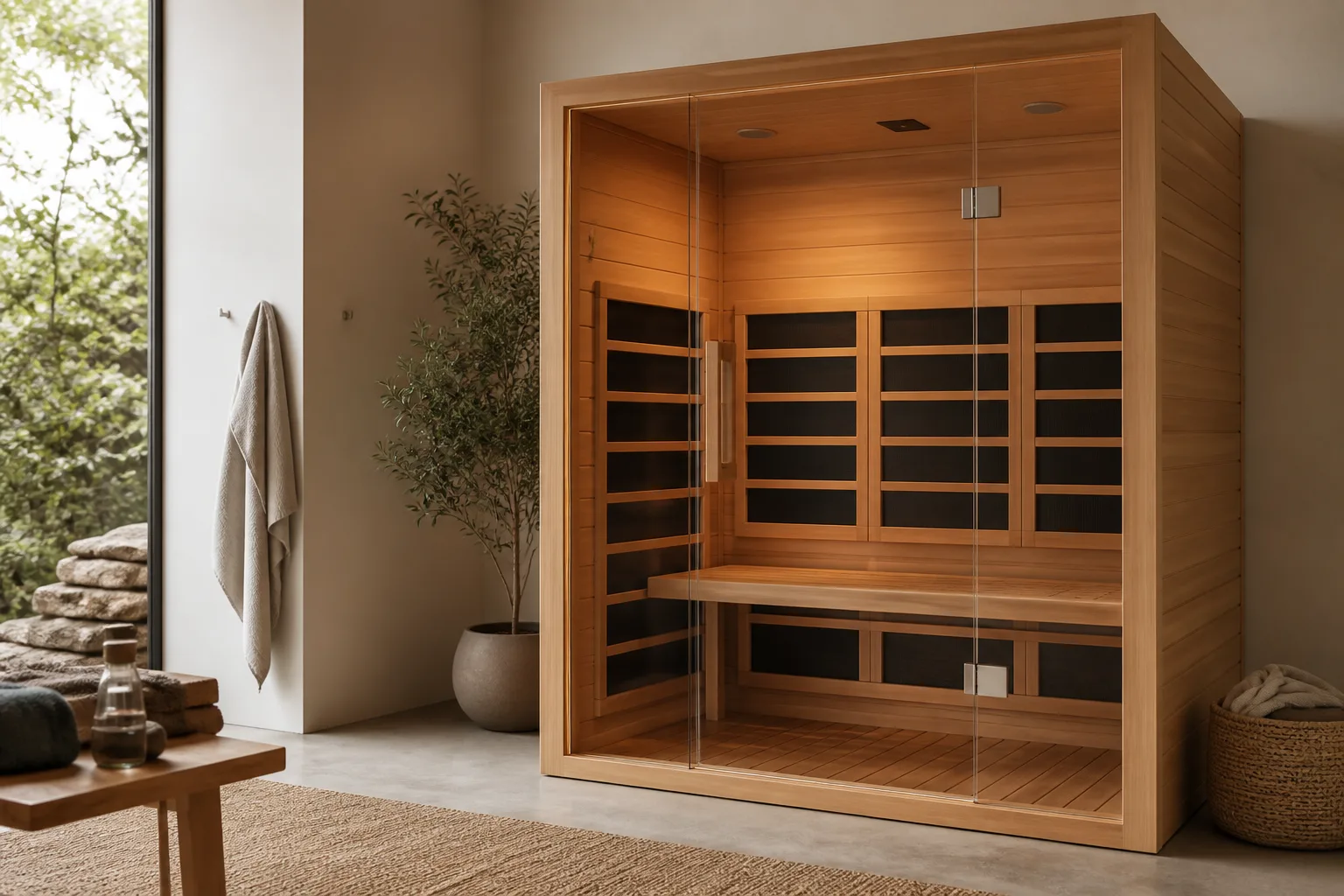
The outdoor rating comes first
An indoor infrared cabin does not become an outdoor model when it is placed beneath a cover. Ask whether the complete enclosure and equipment are designed for the intended exposure. Roof construction, seals, ambient conditions, and the installation manual matter more than how sheltered the location appears.
Consider the surrounding weather
Plan for runoff, wind-driven rain, changing temperatures, and a dry route to the cabin. Check how the manufacturer addresses exterior care and any seasonal operating limitations. Keep required vents and service areas clear rather than enclosing the cabin in a way that changes its intended installation.
Coordinate the power route
The supply and connection need to suit both the equipment and its outdoor setting. Give the electrician the exact manual and proposed location before selecting accessories or extending a cable route. Identify where controls and isolation points will remain accessible without exposing unsuitable components to the weather.
Look at coverage from the seat
Infrared panels should be assessed in relation to where you actually sit. Compare the emitter positions, bench depth, legroom, and access to controls instead of counting panels alone. A specification sheet is most useful when it includes a clear interior drawing that connects the heating equipment with the intended seating positions.
Read model-specific specifications
Infrared product descriptions can use similar terms for different equipment. Ask for the emitter type, operating instructions, electrical requirements, and any test reports relevant to the claim you are comparing. Do not infer medical benefits, exposure levels, or outdoor suitability from a broad product label or a general statement about infrared technology.
Compare the ownership details
Confirm how the cabin is delivered, which parts need assembly, and how panels or controls can be reached for service. Review the written warranty and replacement-part process before ordering. For routine care, follow the instructions for timber, glazing, and electrical panels separately, keeping cleaning liquids away from components that must remain dry.
Questions Before You Choose
Can I put an indoor infrared sauna under a patio roof?
Not unless the manufacturer approves that use. Shelter alone does not change an indoor cabin’s placement rating.
Does an outdoor infrared sauna need a separate base?
It needs the supporting surface specified by the manufacturer, with suitable level, loading, and drainage characteristics.
Can it operate in every climate?
Do not assume so. Check ambient-temperature limits, exposure restrictions, and any seasonal instructions for the exact model.
Is the heater equipment weatherproof on its own?
The complete installation must be suitable. Panel, controller, wiring, and enclosure protection cannot be judged separately by appearance.
Will a cover replace exterior maintenance?
No. Follow the cabin’s roof, seal, timber, and ventilation maintenance instructions even if a permitted cover is used.
Can I use an outdoor extension cord?
Follow the specified connection method. Do not substitute an extension lead for the circuit or wiring arrangement the model requires.
What is the most important document before purchase?
Obtain the outdoor installation manual for the exact configuration, including exposure limits, base requirements, electrical details, and warranty conditions.