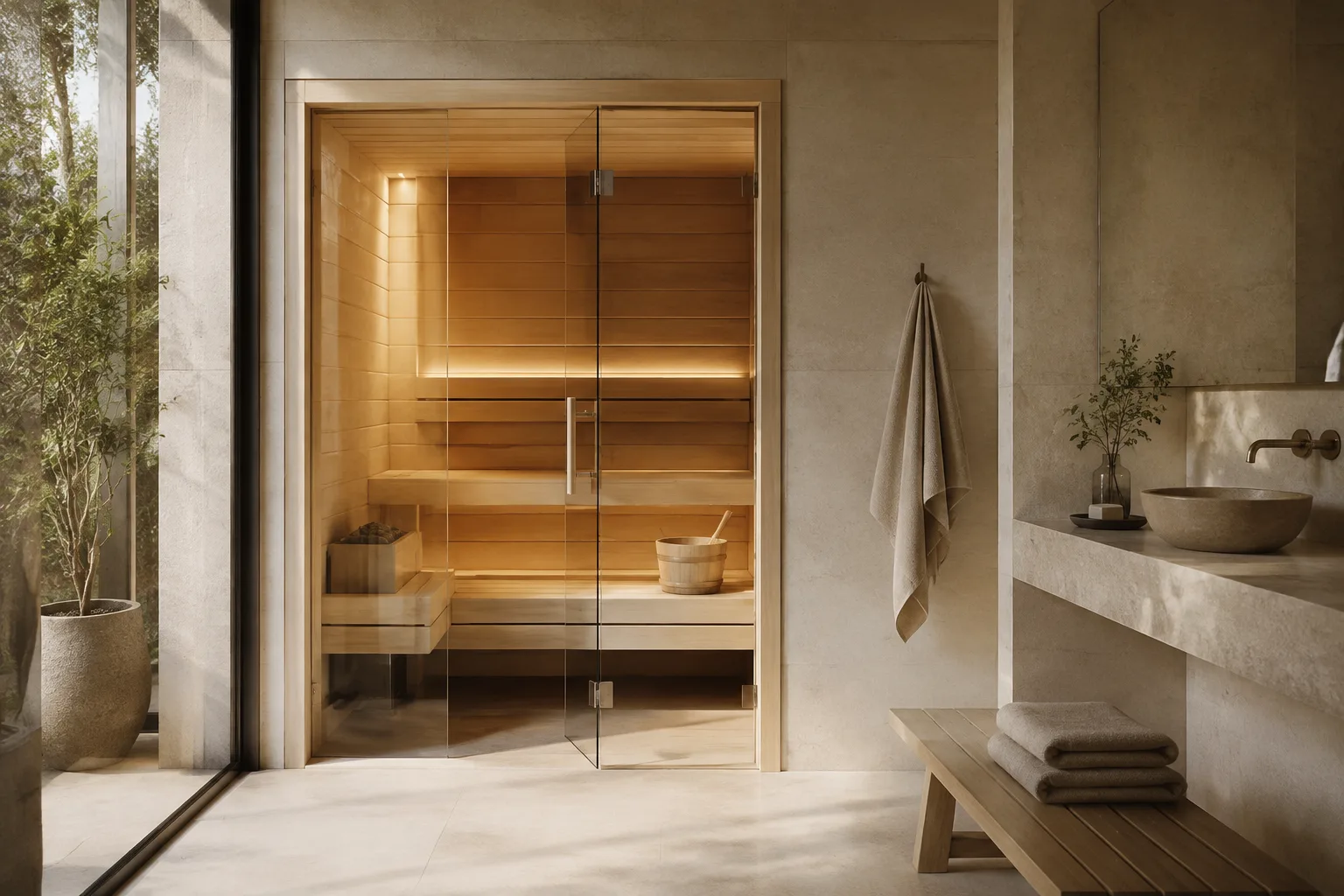
Choose a seat that suits you
A solo cabin should fit your normal posture rather than simply provide the smallest possible footprint. Compare bench depth, back support, foot placement, and headroom. If you like changing position during a session, look for clear interior dimensions that show where that movement is possible.
Keep controls within comfortable reach
Check where you enter, sit, and adjust the system. A control panel that looks convenient from the doorway may be awkward once seated. Consider lighting and any supplied backrest as part of the usable space, without assuming optional accessories are included in the base package.
Plan for one user, not minimal installation
A one-person sauna still needs the prescribed supply, ventilation, foundation or floor, and maintenance access. Choose the heating method before arranging utilities. A compact infrared cabin and a compact traditional room can have very different equipment and clearance requirements despite serving the same number of people.
Measure usable seating space
Capacity labels describe a model’s intended occupancy, but they are not a substitute for a bench drawing. Compare clear bench length and depth, foot space, headroom, and the position of the heater. Think about whether people will sit closely, leave space between each other, or use a bench for reclining rather than counting places alone.
Separate capacity from installed footprint
The overall footprint includes more than the hot-room benches. Walls, a porch, a changing area, door movement, and required clearances can all affect the space needed. Compare the installed envelope with the available room or garden area, then check that the largest delivered component can reach that location before choosing the final capacity.
Choose heat for the enclosure
A larger seating label does not produce a reliable heater size by itself. Match the equipment to the cabin volume, glazing, insulation, and intended heating method using the manufacturer’s instructions. Include the power supply or chimney, controls, delivery, and assembly in the comparison so the selected capacity fits both the property and the completed-project budget.
Questions Before You Choose
Is a one-person sauna comfortable for a tall adult?
Check clear seated height, bench depth, and foot space against that person’s measurements; the capacity label does not answer this.
Can I recline in a one-person cabin?
Only if the bench length and layout permit it. Many compact solo models are designed around upright sitting.
Does a one-person sauna always use infrared?
No. Solo spaces can use different heating systems; compare the exact cabin and equipment configuration.
Can I move it without disassembly?
Use the manufacturer’s handling instructions. Small capacity does not mean the complete enclosure can safely be carried intact.
Does it require a dedicated electrical supply?
Check the selected model’s circuit and connection requirements before relying on any existing outlet.
What interior feature should I prioritize?
Prioritize a comfortable seated position with usable foot space and access to the controls and exit.
Is buying a two-person cabin worthwhile for solo use?
It can be if the extra usable bench space suits your routine and the larger installed footprint fits the property.